
Introduction
Egusi soup is one of the most beloved dishes in Nigerian cuisine. It is rich, comforting, and deeply satisfying. But for many people trying to lose weight or manage their heart health, it often comes with one concern: the heavy use of palm oil.
What if you could enjoy the same bold flavors and signature texture of egusi soup without the excess oil and calories?
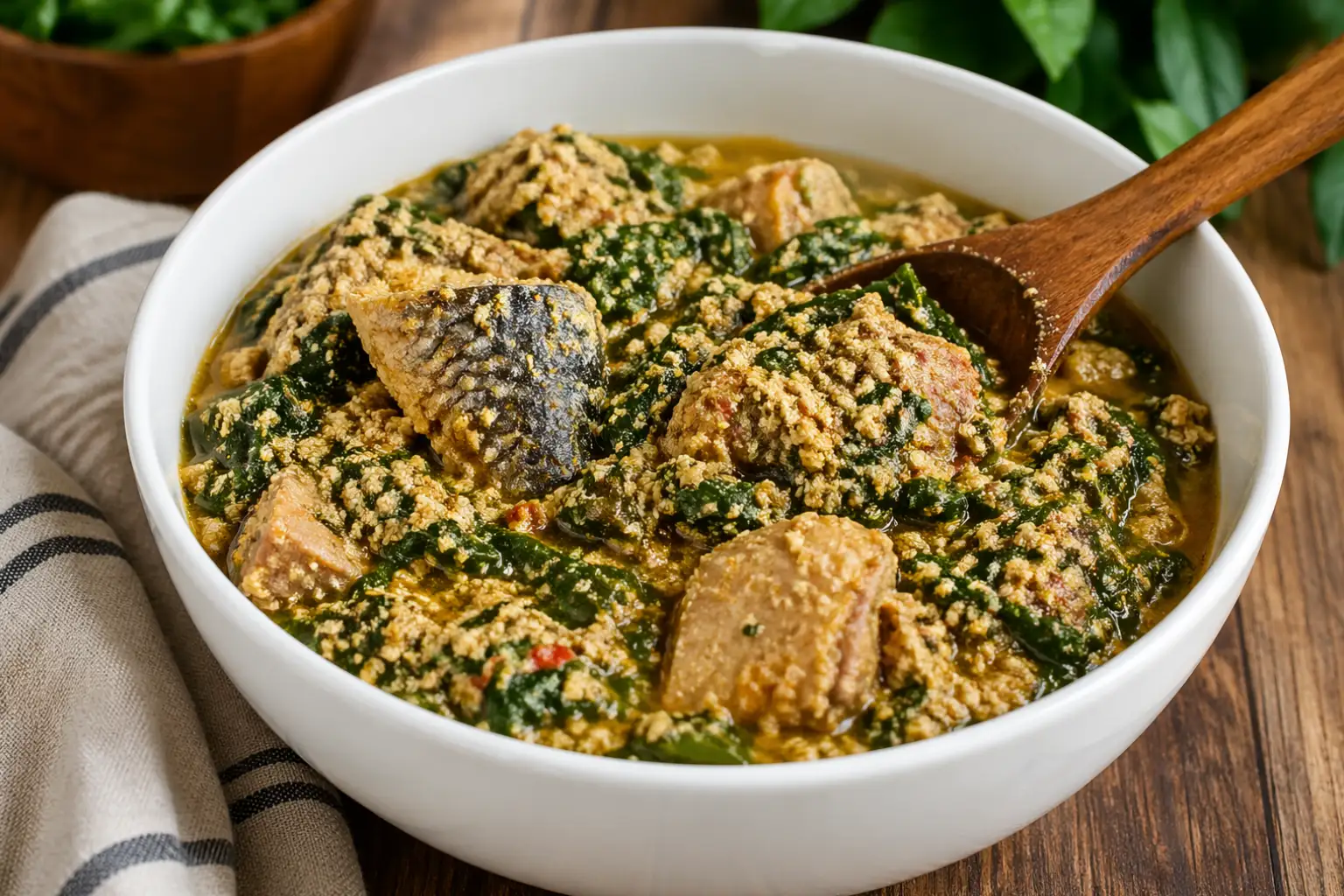
This oilless egusi soup recipe is designed to give you exactly that. It keeps everything you love about the traditional dish while offering a lighter, healthier approach that supports weight management and overall wellness.
Whether you’re watching your calorie intake, managing hypertension, or simply looking for a smarter way to enjoy your favorite meals, this recipe proves that healthy eating doesn’t have to mean giving up cultural foods.
You Don’t Need Oil to Enjoy Egusi
If you think egusi soup must swim in palm oil to taste good, it’s time to rethink that belief.
You can achieve that rich, satisfying, traditional flavor without a single drop of oil and still enjoy the thick, hearty texture you love.
This oilless egusi soup isn’t a “diet version” that feels like a compromise. It’s a smarter, lighter, and heart-friendly upgrade that fits perfectly into a modern, health-conscious lifestyle.
Why Go Oilless?
Making small, realistic changes can have a big impact—and reducing oil in soups is one of the most effective:
Lower Calories
Palm oil is calorie-dense. Just 1 tablespoon contains about 120 calories. Traditional egusi soup can include 4–6 tablespoons, adding 500–700 extra calories per pot.
Better Heart Health
Excess palm oil increases saturated fat intake, which may negatively affect cholesterol levels—especially important for people managing hypertension or cardiovascular risk.
Supports Weight Loss
Removing oil significantly reduces calorie intake without reducing portion size, helping you stay full while maintaining a calorie deficit.
Healthy Oilless Egusi Soup Recipe
Ingredients
- 1 cup ground egusi (melon seeds)
- 2 cups ugu (fluted pumpkin leaves) or any leafy greens, chopped
- 1 handful of okazi (afang leaves), sliced
- 2 tablespoons ground crayfish
- Assorted protein (fish, chicken, or lean beef)
- 1 medium onion (blended or chopped)
- 2–3 fresh peppers (ata rodo), to taste
- 2 seasoning cubes
- Salt to taste
- 3–4 cups meat or fish stock (oil substitute)
Step-by-Step Instructions
- Wash and season your protein; cook with onions, seasoning cubes, and salt.
- Reserve the stock—this is your flavor foundation.
- Blend pepper with part of the onion.
- Bring the stock to a gentle boil.
- Add blended pepper mix, crayfish, and seasoning. Simmer for 3–5 minutes.
- Taste and adjust seasoning early to build flavor depth.
- Mix ground egusi with a little water to form a thick paste.
- Scoop and drop into the boiling soup like dumplings.
- Do not stir immediately—allow to set for 5–7 minutes.
- Gently stir to slightly break the lumps.
- Add ugu and okazi leaves. Simmer for 2–3 minutes.
- Adjust salt and consistency.
Your soup should be thick, rich, and aromatic—even without oil.
Calories Comparison
| Version | Estimated Calories (Per Serving) |
|---|---|
| Traditional Egusi (with palm oil) | 450–600 kcal |
| Oilless Egusi Soup | 250–350 kcal |
That’s up to 40–50% fewer calories without sacrificing taste or satisfaction.
Common Mistakes to Avoid
- Watery soup: Use less water initially—egusi thickens as it cooks.
- Lack of flavor: Build a strong stock base instead of relying on oil.
- Breaking lumps too early: Let egusi set before stirring.
Who Is This Recipe Perfect For?
- Individuals trying to lose weight
- People managing hypertension
- Anyone reducing fat intake for heart health
- Busy professionals looking for healthy Nigerian meals
Frequently Asked Questions (FAQs)
Can egusi make you fat?
Egusi is nutrient-dense and contains healthy fats. Weight gain usually comes from excess oil used in cooking—not the egusi itself.
Is palm oil unhealthy?
Palm oil is not inherently bad, but high consumption of saturated fats may impact heart health over time.
Can I eat egusi for weight loss?
Yes. When prepared without oil, egusi soup becomes a calorie-conscious meal that supports weight loss goals.
Conclusion
Healthy eating is not about restriction—it’s about making better choices with the foods you already love. By removing palm oil and focusing on flavor-building techniques, this oilless egusi soup transforms a traditionally heavy dish into a nutrient-dense, calorie-conscious option. It’s practical, satisfying, and sustainable—everything a good diet should be. You don’t have to give up Nigerian meals. You just have to prepare them smarter.